
Blog · July 27, 2026 · 7 min read
Coinzilla alternatives for web3 advertisers (2026)
Comparing the crypto ad networks advertisers actually shortlist in 2026: how Specify, Blockchain-Ads, Bitmedia, Cointraffic, and HypeLab differ on billing, targeting, and measurement.
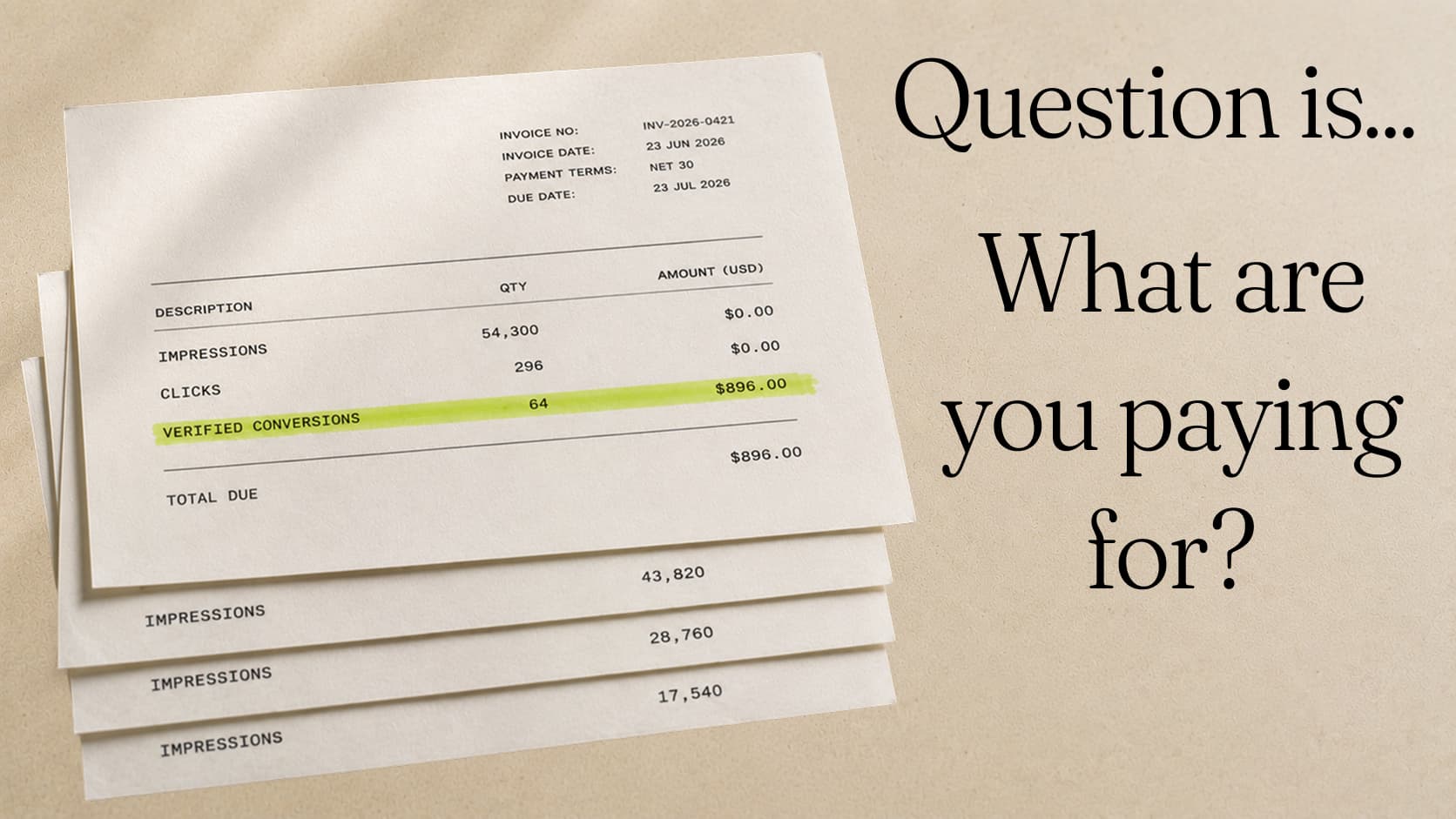
Coinzilla has been a fixture of crypto advertising since 2016: a display-led network running banners and native units across crypto media sites, with a press-release and sponsored-article marketplace alongside. For visibility campaigns it remains a reasonable default. But most teams searching for an alternative are not looking for another impression-billed network. They are looking for a way to know whether the money did anything. This guide covers the networks web3 advertisers actually shortlist in 2026 and how they differ where it matters: billing, targeting, and measurement.
Disclosure: this is Specify’s blog. We have an obvious interest in the conclusion, so we have kept the comparison to dimensions you can verify on each network’s own site, and we are explicit about the cases where a competitor is the better fit. One caveat that applies to this whole market: capability claims for other networks come from their own materials, and this industry is short on independent proof. Where we cite Specify results, the conversions behind them are onchain and checkable, which is the standard we think every network should be held to.
What to actually compare
Every crypto ad network says “reach crypto users.” The real differences sit in four places:
- Billing model. Do you pay for impressions and clicks, or for outcomes? Impression billing is fine when you can measure outcomes yourself; it is a leap of faith when you cannot.
- Targeting data. Contextual placement (crypto websites) is not the same as behavioral targeting (what a wallet has actually done onchain).
- Placement quality. Banner slots on media sites behave very differently from native placements inside wallets and apps that people use daily.
- Measurement. Click-through attribution to a landing page tells you about traffic. Only onchain attribution tells you about conversions, volume, and incrementality.
The alternatives
Specify
Specify (that’s us) is built around one idea: advertisers should pay for conversions verified onchain, not for impressions. Targeting uses observed onchain behavior across 6,000+ protocols (competitors’ users, active LPs, power traders), ads run as native placements inside products like wallets, explorers, and Discord communities, and every conversion ties to a transaction hash you can check yourself. Campaigns are measured on incrementality against a holdout, not last-click. CoW Swap’s campaign reached 1,500+ verified conversions, more than $50M in attributed volume, and 6x lift versus identical users who never saw the ads. Every engagement starts with a $1,000 done-for-you test campaign. Where we are honest about fit: if you want maximum-reach banner impressions for a brand-awareness push, a CPM display network will give you more raw volume.
Blockchain-Ads
A programmatic platform positioning itself on performance and scale, with wallet-based audience segments and broad placement reach across crypto and mainstream inventory. A serious option for teams that want programmatic-style buying with crypto audiences. Billing is CPM by default, with CPA available on larger budgets per their materials, and their reporting includes onchain transaction detail. The difference from outcome-first networks is that conversion billing and holdout measurement are the default from the first dollar, not a tier you reach.
Bitmedia
A veteran display network with CPM and CPC billing across a large pool of crypto websites. Straightforward banner campaigns, self-serve tooling, and reach across crypto media. The trade-off is the classic display one: you buy traffic, and proving what that traffic did afterward is your problem.
Cointraffic
Another long-running display network, known for relationships with large crypto media publishers. Display and native inventory plus press-release distribution, billed CPM or CPC, good for visibility during launches and announcements, with attribution left to the advertiser.
HypeLab
The closest to Specify in placement philosophy: native ad units inside wallets and dapps rather than banners on media sites. If in-product placement is what you want, both networks deliver it; the main difference is the billing and measurement model, where Specify bills per verified onchain conversion rather than per impression.
A quick decision framework
| You want | Look at |
|---|---|
| To pay only when a real user converts, verified onchain | Specify |
| Native placements inside wallets and dapps | Specify, HypeLab |
| Maximum display reach across crypto media sites | Bitmedia, Cointraffic, Coinzilla |
| Programmatic-style buying with wallet segments | Blockchain-Ads |
| To test the channel cheaply before committing | Specify’s $1,000 test campaign |
The question that settles it
Ask each network one question: “When the campaign ends, how do I know it worked?” If the answer is a dashboard of impressions and clicks, you are buying traffic and hoping. If the answer is a list of transaction hashes, cohort volume, and a lift number against users who never saw the ad, you are buying outcomes. That difference, not the logo list, is what separates the networks on this page.